Now Reading: Stop Microwaving These Foods — Here’s Why It’s Dangerous
-
01
Stop Microwaving These Foods — Here’s Why It’s Dangerous


The microwave is probably the most used appliance in most kitchens. It is fast, simple, and requires almost no effort. You put something in, press a button, and in a couple of minutes your food is warm. What most people do not realize, though, is that microwaving certain foods can be genuinely dangerous — not just for taste, but for your health. Some foods turn toxic when reheated this way. Others explode. A few lose all their nutritional value. And some carry bacteria risks that the microwave simply cannot handle. Knowing which foods to keep away from your microwave could save you from a ruined meal, a trip to the doctor, or a very messy kitchen.
Eggs
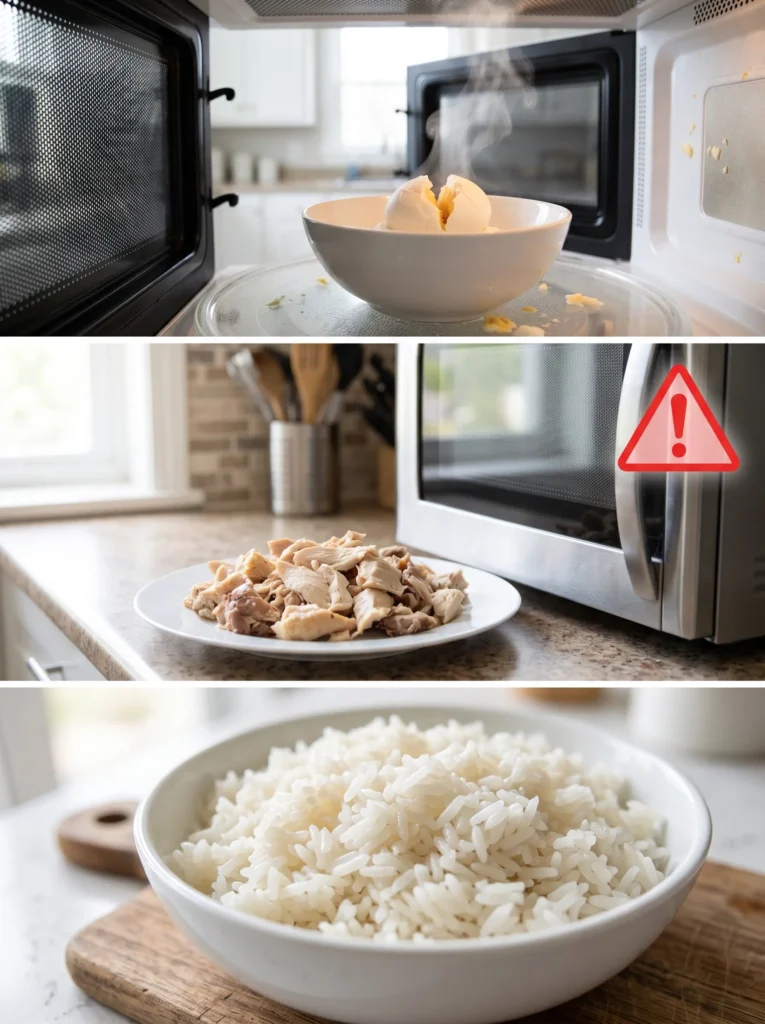
Reheating cooked eggs in the microwave is a bad idea for a couple of reasons. Hard-boiled eggs, whether shelled or still in their shell, trap moisture when exposed to microwave heat. That moisture turns to steam rapidly inside, creating intense pressure — the same effect as a tiny pressure cooker. The result is often a dramatic, messy explosion inside your microwave. Even scrambled eggs and omelets can reheat unevenly in the microwave, leaving parts dangerously undercooked and bacteria-friendly while the rest becomes rubbery and unpleasant. If you need to reheat eggs, use a pan on the stovetop on low heat for far better results.
Chicken
Reheating chicken in the microwave is one of the more risky things you can do with leftovers. The core issue is that microwaves do not heat food evenly — they cook from the outside and often leave the center cooler than it should be. Chicken is already a food with a real risk of salmonella contamination if not fully cooked. When you reheat it in the microwave, parts of the chicken may not reach the temperature needed to kill bacteria. Studies on food reheating found that people who reheated raw meat in a microwave were far more likely to become ill than those who used a skillet. For leftover chicken, the safest method is to reheat it in an oven or stovetop, covered, with a little water or broth to prevent it drying out.
Rice
Many people assume rice is harmless once it has been cooked. In reality, cooked rice is one of the more dangerous foods to handle carelessly. Rice can contain spores of Bacillus cereus, a type of bacteria that produces toxins causing nausea, vomiting, and diarrhea. These spores survive the cooking process and can multiply rapidly if rice is left at room temperature for too long. Once that happens, the toxins they produce cannot be destroyed by reheating — not in a microwave, and not in a pan. The safest approach is to refrigerate cooked rice within an hour of cooking it, and when reheating, heat it all the way through to piping hot rather than just warm.
Potatoes
Cooked potatoes present a specific problem when they have been stored incorrectly. If potatoes are cooked wrapped in aluminum foil and then left at room temperature rather than being refrigerated promptly, they create an airless environment where Clostridium botulinum — the bacteria responsible for botulism — can thrive. Reheating that contaminated potato in a microwave does not eliminate the toxin. Beyond that, microwaved leftover potatoes often develop an unpleasant texture, getting either rubbery or dried out. Reheating in the oven gives much better results both in taste and safety.
Leafy Greens — Spinach, Kale, and Beetroot
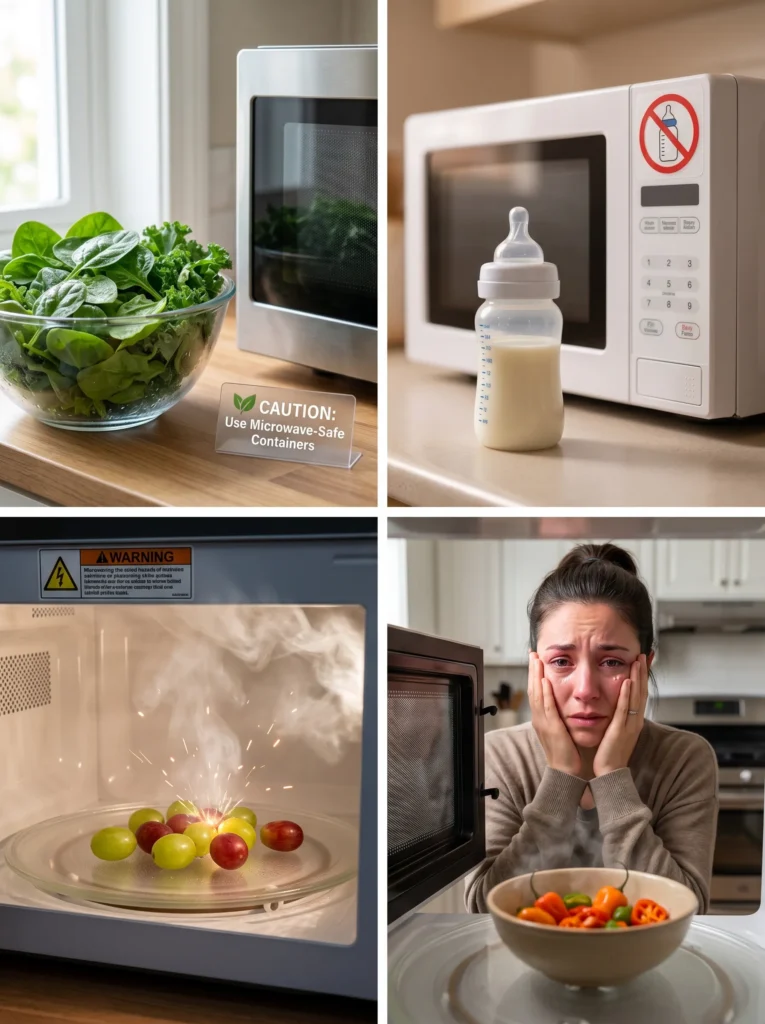
Spinach, kale, celery, and beetroot all contain naturally occurring nitrates, which are completely harmless and even beneficial to the body when eaten fresh. The problem arises when these vegetables are reheated at high temperatures. During reheating, particularly in a microwave, those nitrates can convert into nitrosamines, which are compounds linked to cancer risk. This is not a reason to stop eating leafy greens — they are wonderfully nutritious. It is simply a reason not to microwave them. If you have leftover cooked spinach or kale, try eating it cold in a salad, or reheat it gently in a pan over low heat.
Processed Meats
Hot dogs, deli slices, bacon strips, and other processed meats already contain nitrites as preservatives. When exposed to the high heat of a microwave, those nitrites can also convert into nitrosamines, the same type of compounds mentioned with leafy greens. The risk increases with the more time and higher temperature involved. For these foods, the stovetop or a conventional oven is a safer reheating method. It also tends to produce better results in terms of texture and taste — nobody wants a soggy microwaved hot dog when they could have a pan-fried one.
Breast Milk and Baby Formula
This one is especially important for new parents. While it might seem convenient to warm a baby bottle quickly in the microwave, it is something that should never be done. Microwaves heat liquids unevenly and create what are called “hot spots” — sections of the liquid that are dramatically hotter than the rest. A bottle that feels warm on the outside could have a pocket of scalding liquid inside that can burn a baby’s mouth and throat severely. Beyond the physical danger, the heat from a microwave can also destroy important nutrients and antibodies in breast milk, reducing its benefits significantly. The safest approach is always a warm water bath or a proper bottle warmer.
Grapes
This one surprises almost everyone. Grapes in a microwave can actually generate plasma — a high-energy state of matter created when gas is ionized. A physics experiment that has been widely shared online shows that when a grape is cut almost in half and placed in a microwave, it can create enough plasma to damage the interior of the appliance and even burn through materials. Even beyond this, whole fruits in the microwave tend to burst due to trapped steam. Grapes are best enjoyed cold and fresh, and definitely have no business being near a microwave.
Hot Peppers
Microwaving hot peppers releases capsaicin into the air as a vapor. Capsaicin is the compound that makes peppers hot, and in concentrated vapor form, it can irritate eyes, skin, and airways quite intensely. Opening a microwave door after heating chili peppers can feel like getting a face full of pepper spray. If you need to reheat a dish that contains hot peppers, do so on a stovetop where you can manage the heat and ventilate properly.
Seafood
Reheating seafood in the microwave is rarely a good idea for reasons of both taste and safety. Fish and shellfish reheat very unevenly in microwaves and can develop a strong, unpleasant smell when microwaved that tends to linger in the kitchen for hours. Beyond smell, certain shellfish carry bacteria that need consistent, thorough heat to be safely eliminated — something microwaves cannot reliably provide. Leftover seafood is best reheated in a pan or oven at a steady temperature.
Mushrooms
Mushrooms are best eaten fresh or reheated only on a stovetop. They contain proteins and nutrients that can degrade or change when exposed to the uneven heat of a microwave. More importantly, mushrooms left at room temperature for too long and then microwaved can harbor bacteria that cause digestive problems. If you have leftover cooked mushrooms, reheat them quickly in a hot pan with a little butter or oil for the best flavor and safety.
Old Leftovers
No matter what food is involved, leftovers that have been sitting in the refrigerator for more than four days should simply be thrown away. Microwaving very old food does not make it safe. Spoilage organisms like mold and yeast can produce toxins that survive reheating, and the microwave will not save you from them. The general food safety guideline from the USDA is that cooked leftovers are safe for three to four days in the refrigerator. After that, the risk simply is not worth it.
The microwave is a brilliant tool for many kitchen tasks, but it is not a one-size-fits-all solution. Understanding which foods need a different reheating method keeps you safer, and often results in food that actually tastes better too. When in doubt, the stovetop and the conventional oven are your most reliable options.
FAQs
Q: Is it always unsafe to reheat food in the microwave? No — many foods reheat perfectly well in a microwave. The concern is with specific foods that either carry bacteria risks, can explode due to steam buildup, or produce harmful compounds when exposed to high heat.
Q: How can I tell if my microwave-reheated food is safe? Using a food thermometer is the most reliable method. Food safety experts recommend heating all leftovers to an internal temperature of at least 165°F (74°C) throughout — not just in one spot.
Q: What is the safest way to reheat chicken? The safest method is in an oven at around 350°F, covered with foil to retain moisture, or in a pan on the stovetop with a splash of broth. Always ensure the chicken reaches 165°F internally throughout.