
Now Reading: 28 Outdoor Hanging Plant Ideas
-
01
28 Outdoor Hanging Plant Ideas


Hanging plants transform ordinary outdoor spaces into something that feels lush, alive, and carefully considered. They add dimension at eye level and above, which is something ground-level planting simply cannot do. Whether you have a wide porch, a narrow balcony, a pergola, or just a few sturdy hooks on an exterior wall, there are hanging plant combinations that will work beautifully for your space. These 28 ideas cover a wide range of plants, styles, and situations.
1. Classic Fuchsia Hanging Basket
Fuchsia is a hanging basket staple for a good reason — the pendulous two-tone blooms in pink, purple, and white are genuinely eye-catching. Plant in a wire basket lined with coconut fiber and fill generously with a trailing fuchsia variety. Keep it in partial shade and water consistently. Deadhead spent blooms regularly to encourage continuous flowering through the season.
2. Trailing Petunias in Bold Colors
Petunias are one of the most rewarding plants for hanging baskets because they grow fast, bloom nonstop, and come in an enormous range of colors. Wave or Supertunia varieties trail beautifully over basket edges. Try a single bold color for a clean look or mix complementary shades like purple and yellow for something more playful and vibrant.
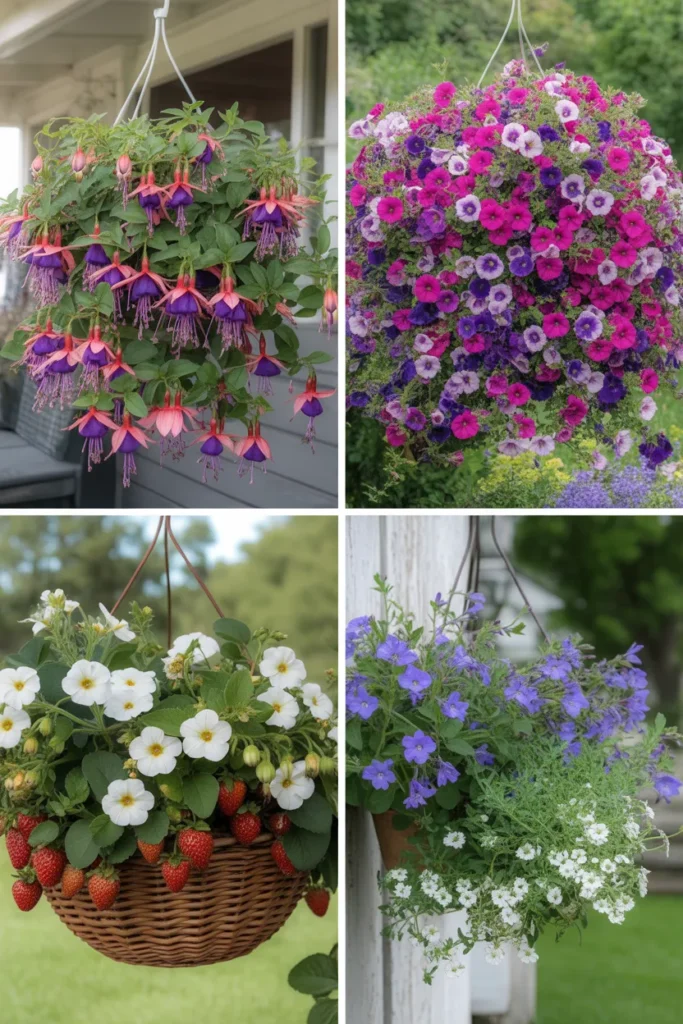
3. Strawberry Hanging Basket
Growing strawberries in a hanging basket is a clever way to produce edible fruit in a small space while also looking quite beautiful. The white flowers, red fruits, and trailing runners make the basket visually interesting throughout the season. Position it in a spot that gets at least six hours of direct sun and water frequently as fruiting plants in containers need consistent moisture.
4. Lobelia and Alyssum Mix
Lobelia’s tiny blue or purple flowers combined with white sweet alyssum in a single hanging basket creates a delicate, cloud-like effect. Both plants are relatively compact and do not overpower each other. The contrast of cool blue against crisp white looks fresh and elegant and the sweet alyssum adds a soft honey fragrance to the air around the basket.
5. Cascading Begonias
Tuberous begonias with pendulous flower heads are magnificent in hanging baskets. The blooms are large and almost rose-like in shape, coming in soft peach, salmon, yellow, and red tones. They prefer dappled shade which makes them ideal for shaded porches where other flowering plants would struggle. Keep them consistently moist and they will bloom prolifically from summer through fall.
6. Herb Hanging Basket for the Kitchen Porch
Hang a basket of mixed culinary herbs just outside the kitchen door so you can snip what you need while cooking. Combine trailing rosemary, compact basil, thyme, and flat-leaf parsley in a single large basket. Use a quality potting mix with good drainage and fertilize lightly every two weeks. It is practical, fragrant, and genuinely attractive in a casual, organic way.
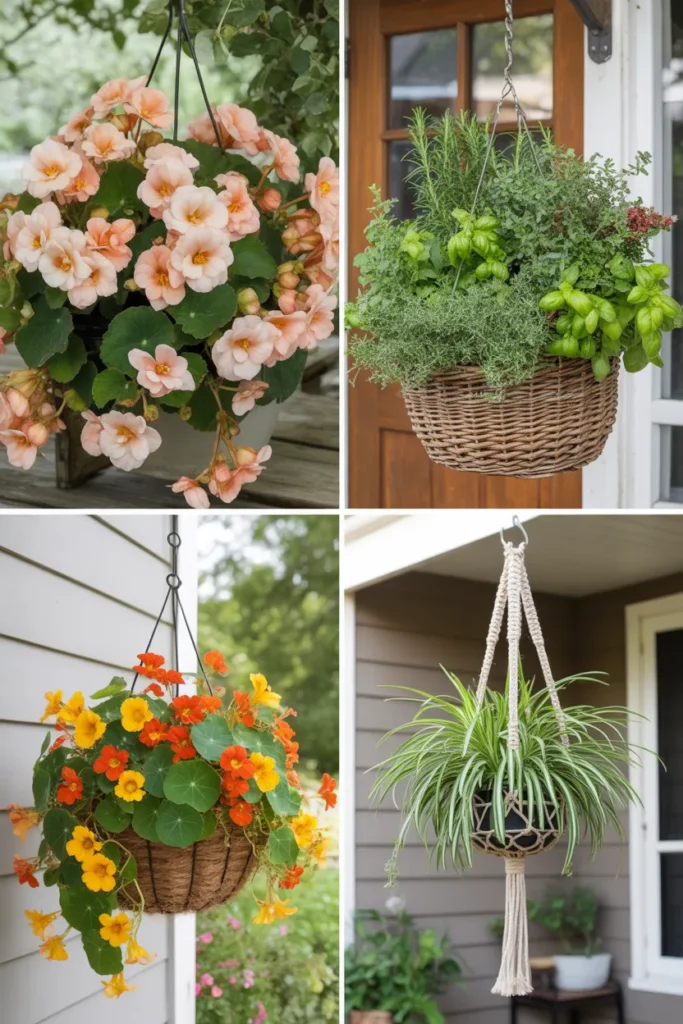
7. Trailing Nasturtiums
Nasturtiums are one of the easiest plants to grow in a hanging basket and one of the most rewarding for the little effort they require. The round leaves and bright orange, yellow, and red flowers trail naturally and fill a basket quickly. Both the flowers and young leaves are edible with a peppery flavor. They prefer poor soil actually, so do not over-fertilize.
8. Spider Plant in a Macramé Hanger
Spider plants are among the most unfussy houseplants that also thrive outdoors in a sheltered spot during warmer months. Their arching green and white striped leaves and trailing baby plantlets look beautiful in a natural macramé hanger. Hang in bright indirect light on a sheltered porch and bring indoors before the first frost. They are nearly impossible to kill.
9. Bacopa Trailing Cascade
Bacopa is a modest-looking plant that punches above its weight in a hanging basket. The tiny white or pink flowers appear in massive quantities over cascading stems that spill beautifully over basket edges. It blooms from spring until frost with very little fuss and pairs wonderfully with petunias or calibrachoa to add soft texture and fill the gaps between larger blooms.
10. Million Bells (Calibrachoa) Basket
Calibrachoa, also called million bells, produces an astonishing number of small petunia-like blooms on naturally trailing stems. A single basket of calibrachoa filled with one or two colors looks lush and overflowing within weeks of planting. They are self-cleaning, meaning you do not need to deadhead, which makes them ideal for high-hanging baskets that are hard to reach easily.
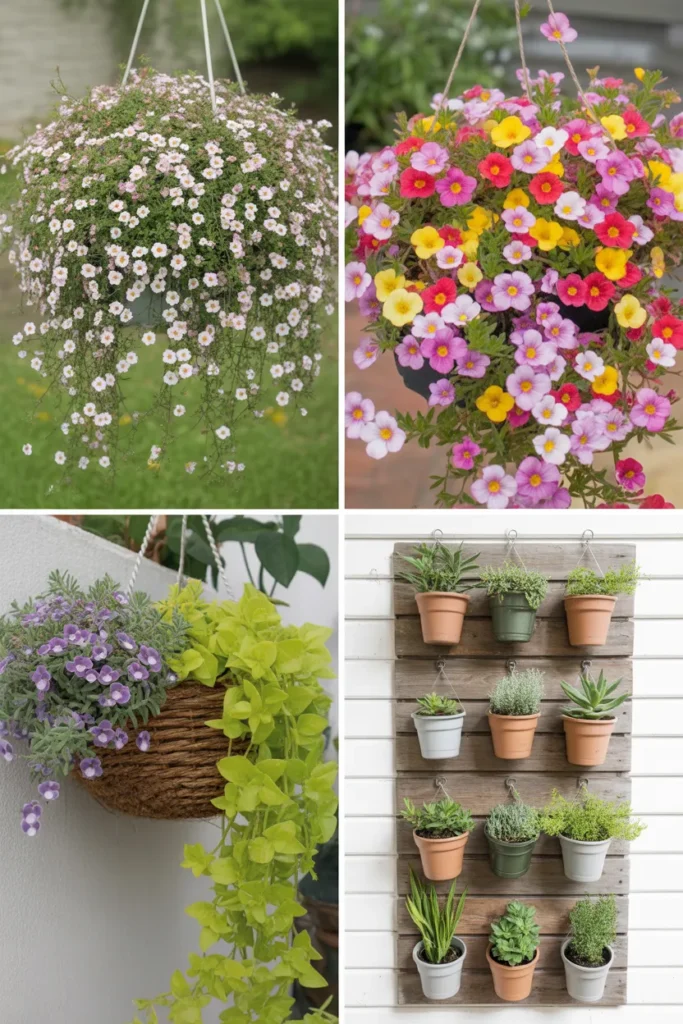
11. Tropical Look with Wandering Jew
Tradescantia, commonly known as wandering jew or spiderwort, has striking purple and silver striped leaves that drape beautifully over basket edges. It has a distinctly tropical feel even in temperate climates. Pair it with a trailing chartreuse sweet potato vine for a rich contrast of colors. This combination works in partial shade and grows quickly to fill a basket.
12. Wooden Plank with Multiple Small Pots
Mount a weathered wooden plank horizontally on a wall and hang small individual pots from hooks along its length. Plant each pot with a different succulent, trailing sedum, or small herb. The result is a living wall-style display that has structure and variety. You can rearrange pots easily and replace individual plants when seasons change without redoing the whole arrangement.
13. Geraniums in a Traditional Hanging Pot
Classic geraniums in a terracotta-look hanging pot have timeless appeal. Their bright clusters of red, pink, or salmon flowers stay colorful for months with relatively little attention. They prefer a sunny position and need to dry slightly between waterings to avoid root rot. Pinch off faded flower heads regularly to keep new blooms coming all summer long.
14. Moss-Lined Wire Basket with Wildflower Mix
Line a wire hanging basket with thick fresh moss instead of coconut fiber and fill it with a mix of wildflower-style plants — viola, lobelia, bacopa, and small trailing pansies. The moss gives the basket a naturalistic, woodland feel and retains moisture well. Soak the moss before planting and the basket will hold water much more evenly for the plants inside.
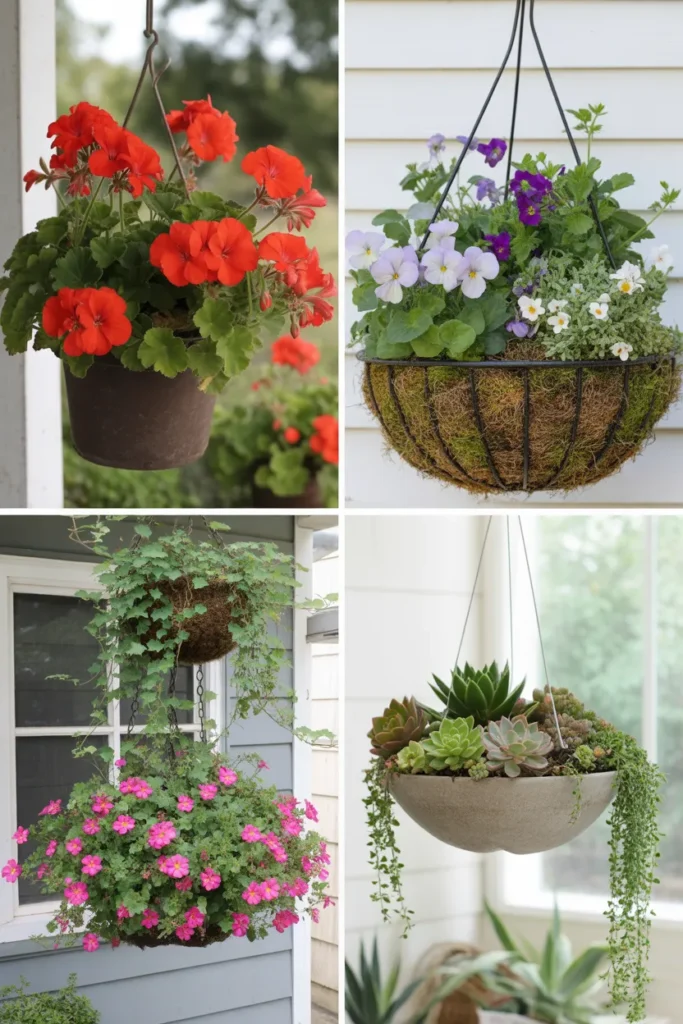
15. Ivy and Impatiens Combination
Trailing ivy provides the structure and year-round greenery while shade-loving impatiens add pops of color in pink, red, or coral. This combination works exceptionally well in shaded spots like a north-facing porch or balcony. The ivy trails dramatically and the impatiens fill the interior with color, creating a basket that looks full and balanced from all angles.
16. Succulent Hanging Bowl
A wide shallow bowl planted with a mix of trailing and rosette-forming succulents makes an architectural hanging display that barely needs watering. Use burro’s tail, string of pearls, and echeveria together for a combination of interesting textures and subtle colors. Hang in a sunny, sheltered spot and water sparingly — once every week or two in summer and even less in cooler months.
17. Dichondra Silver Falls Hanging Basket
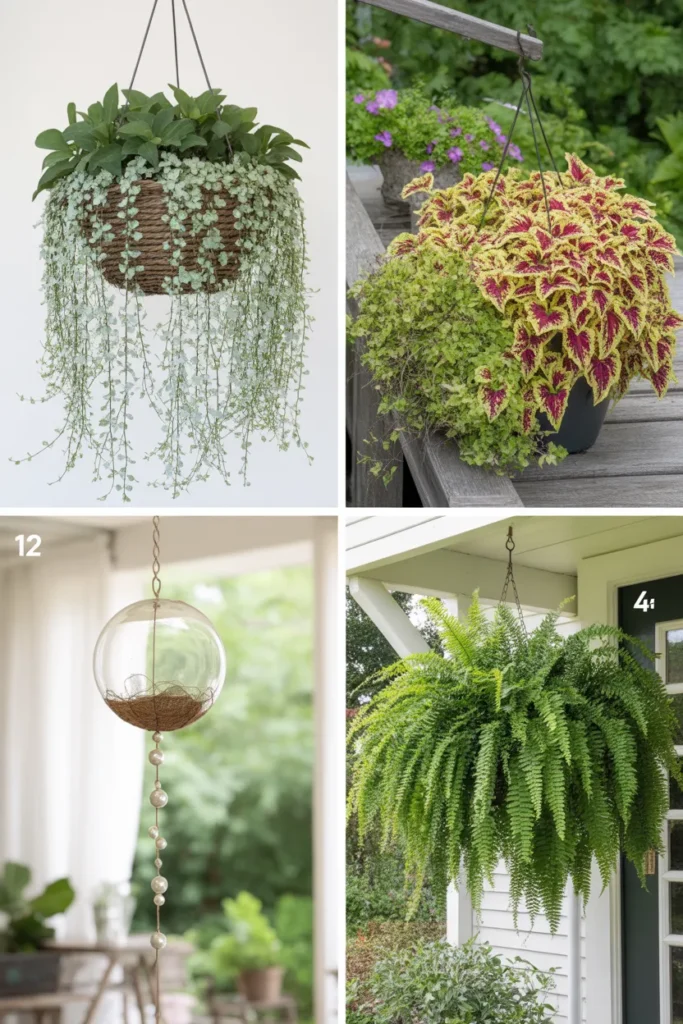
Dichondra silver falls has some of the most beautiful trailing foliage of any hanging plant — silver-grey rounded leaves that cascade in long, flowing curtains up to a meter or more. Plant it solo in a large basket for a dramatic, almost waterfall-like effect. It thrives in sun or partial shade and is drought-tolerant once established, making it a low-maintenance statement plant.
18. Colorful Coleus in a Shaded Hanging Spot
Coleus varieties with trailing habits are ideal for shaded hanging positions where flowering plants refuse to perform. The vibrant leaf patterns in pink, red, lime green, and purple need absolutely no blooms to look spectacular. Choose varieties labeled as trailing or semi-trailing and give them consistent moisture for the best leaf color and fullest growth through the season.
19. String of Pearls in a Hanging Glass Orb
String of pearls planted in a small hanging glass orb or open terrarium creates a delicate and elegant display. The round, bead-like leaves trail down from the base of the glass in thin curtains. This works best in a sheltered, bright spot as glass offers no insulation. It is a conversation piece more than a large display plant and suits minimalist or Scandi-style outdoor spaces.
20. Ferns in Shaded Hanging Baskets
Boston ferns, sword ferns, or maidenhair ferns in large hanging baskets bring a lush, tropical feel to shaded porches and patios. Their arching fronds move gently in the breeze and create a cooling, green atmosphere. Keep them well-watered and mist the fronds in dry weather to prevent browning at the tips. They grow thick and full, making a real statement in a shady spot.
21. Portulaca Sun Baskets
Portulaca, also called moss rose, is a sun-loving, drought-tolerant plant with jewel-colored flowers in orange, yellow, pink, and red. It thrives in hot, dry conditions where other basket plants wilt and struggle. Plant it in a well-draining mix in a sunny position and it will bloom prolifically all summer with almost no attention. The flowers close at night and reopen each morning.
22. Mixed Foliage Tropical Basket
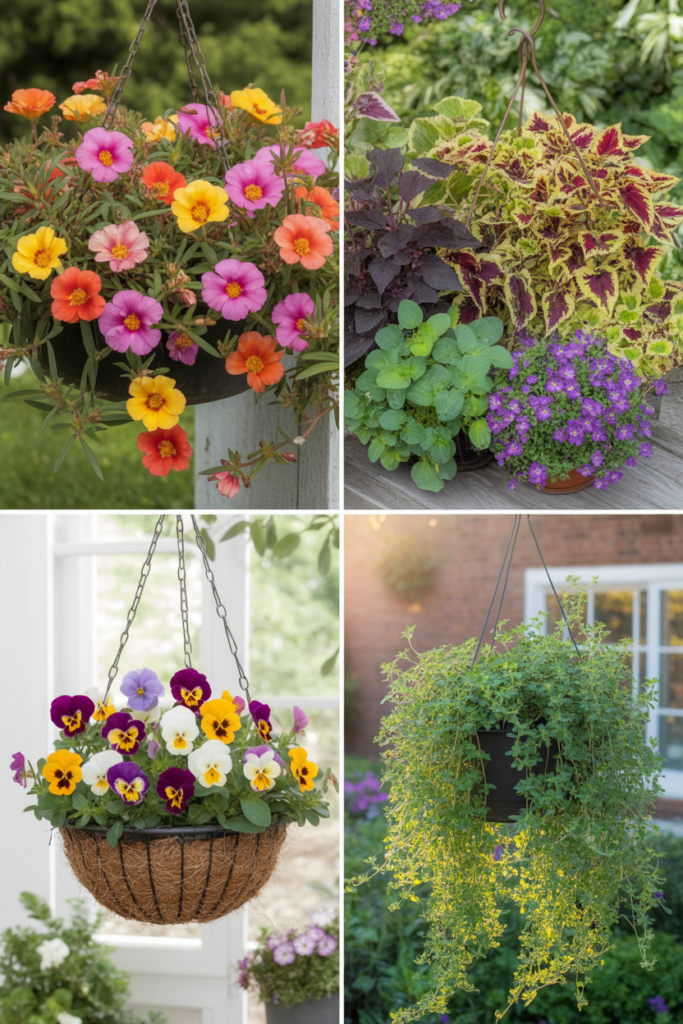
Combine plants with contrasting leaf shapes and colors for a hanging basket that is all about foliage rather than flowers. Try purple heart, golden creeping Jenny, and coleus together for a mix of colors and textures. In summer heat these grow quickly and fill a basket so densely it looks almost like a planted globe. No deadheading required — just water and enjoy.
23. Basket of Annual Pansies for Spring
In early spring before most other plants are ready to go outside, pansies can handle light frosts and bring immediate color to a hanging basket. Mix cool-toned varieties in purple, yellow, and cream for a classic spring combination. They prefer cool weather and will slow down in summer heat, but in spring they perform brilliantly and make an outdoor space feel welcoming and fresh.
24. Creeping Jenny Golden Cascade
Creeping Jenny with golden-lime foliage is an underused but stunning hanging plant. The round, coin-shaped leaves trail in long stems that glow in sunlight. Use it as a filler plant alongside darker flowering plants or let it fill an entire basket on its own for a glowing, monochromatic green display. It tolerates both sun and partial shade, making it very versatile.
25. Mixed Hanging Basket with Thrillers, Fillers, Spillers
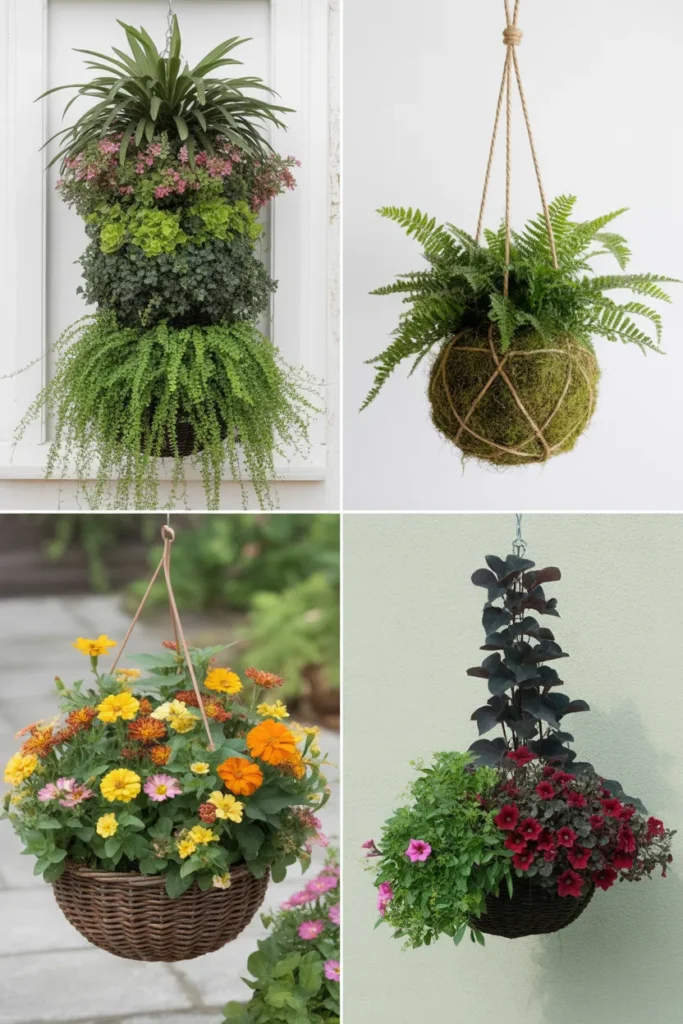
The classic thriller-filler-spiller approach works perfectly for hanging baskets. Choose one upright statement plant as the thriller — maybe a spike or a bold-leaved begonia — then fill with compact bushy plants, and finish with trailers that spill over the edges. This three-layer approach guarantees a basket that looks full, dimensional, and professional rather than flat and one-note.
26. Moss Ball (Kokedama) Hanging Display
Kokedama is the Japanese art of wrapping a plant’s root ball in moss and string, then hanging it freely. You can use trailing pothos, ferns, or small herbs in a kokedama ball for an organic, sculptural hanging display. Group several together at different heights for a dramatic living mobile effect. They need regular soaking rather than watering, which takes some adjustment but looks remarkable.
27. Hanging Planter with Marigolds and Zinnia
Marigolds and small zinnia varieties can go into a hanging basket for a cheerful, cottage-style display. Both plants love sun and heat and are extremely easy to grow from seed or transplant. The orange and yellow marigolds alongside pink and red zinnias creates a warm, happy color palette. They also naturally deter certain garden pests, making them a useful as well as beautiful choice.
28. Dramatic Black and Purple Hanging Basket
For a moody, sophisticated look, combine dark-leaved plants in a single basket. Black-leaved sweet potato vine, dark purple petunias, and deep burgundy calibrachoa together create a rich, jewel-toned display. Place it against a white or pale wall so the dark foliage really stands out rather than disappearing into a dark background. It is an unusual and striking approach.
FAQs
How often should I water a hanging basket? Hanging baskets dry out much faster than ground-level containers because they are exposed to air on all sides. In warm weather check daily and water whenever the top inch of compost feels dry. In very hot weather this might mean watering every day. Adding water-retaining gel to the potting mix at planting time helps keep moisture in longer.
What plants do best in hanging baskets in hot sunny spots? For full sun and heat, choose portulaca, calibrachoa, petunias, verbena, and trailing marigolds. These all thrive in direct sun and handle heat well without wilting. Make sure the basket has adequate drainage and water consistently since sunny positions dry out the compost very quickly, especially on warm days with any breeze.
Can I leave my hanging baskets out in winter? Most tender hanging basket plants cannot survive frost. Bring them inside or treat them as seasonal annuals and replace them each spring. Hardy options like trailing ivy, certain sedums, and winter pansies can stay outside in mild climates but need protection in areas with hard frosts. Check each plant’s hardiness before committing to a year-round outdoor display.


